Saturday, February 22, 2020

Inoculum preparation for biogas generation

The most cheapest and easiest way to produce an inoculum is using digestate from working biogas digester. They are consist of active culture with stable activity because consist of varieties of microbes working together or consortium.

Next source is by taking a scoop of slurry or sediment from anaerobic pond. These are also active microbes we can used directly to produce biogas.

If you happen to live nearby cattle farm, dung is another source of microbes that can produce biogas.But to start with cow dung we need to mix it with water and ferment until it mature in which produces biogas.

Do not mistaken biogas with carbon dioxide. Biogas is flammable while CO2 is not.

So to produce biogas you can start with things that already around you.


Want to construct your own biogas biodigester? Click here!

HRT - hydraulic retention time is period taken for a waste to be digested to produce biogas completely at particular temperature

I am very lucky able to find old air temperature data at my place. The average is like 26.8 celcius. So, according to David David William House 's graph, the approximate HRT is 45 days. So, it is safer for me to decide to choose 50 days HRT for my digester. To determine how much to feed daily is by calculating = digester volume (liter) / HRT (day) = 200 liter/50 days = 4 liter/day. Again, rule of thumb do not get solid food waste over 50% of daily feeding volume. In my case for 4 liter feeding, 2 kg of food waste is the maximum volume then mix with 2 liter of water to a total of 4 liter. If you do not have confident and do not want to get your system sour lets try less than 50% food waste of your daily feeding volume. Please try and error, experiment with your system and you will learn a lot finding the most optimum condition to run your system. Want to construct your own biogas biodigester? Click here!


Low cost biogas digester design and lay out


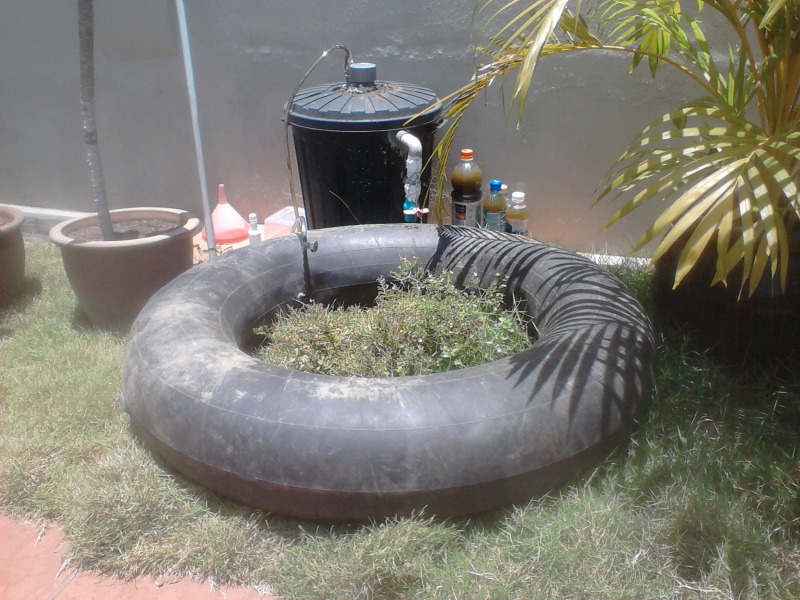
I have always think of ways to recycle my kitchen wastes. Living in housing area with limited backyard space unable me to dig appropriate hole to bury all my kitchen waste without leaving smelly odor. I don't have any experience composting and food waste easily become smelly if you do not handle them properly. Then I came across anaerobic composting which is enclosed and used cow dung as starter. I feel this technique is practical and easy to construct. To make it interesting, I want to use a modified garbage bin and call it food waste recycle garbage bin just like when you throw your usual wastes into a dustbin but mine is a little bit different in which it can recycle organic wastes. That's how I came up with the idea.

Its not really difficult. Take a normal standard garbage bin at modified it a bit by installing inlet for feeding, outlet port for effluent and outlet valve for biogas to be collected into a tyre tube. Its that simple.

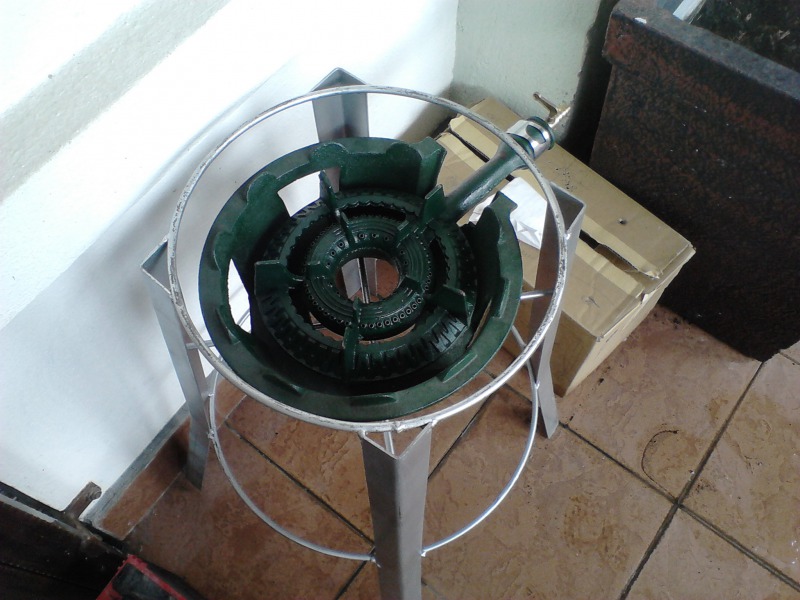
Then I built bigger module have an upgrade experience from my first biodigester as above. The new digester is 160 liter and connected to 500 liter biogas bag as storage. I also found how to modify a normal burner into a biogas burner.


Now I convinced that biogas generated at home really can be used for cooking.

Need Biogas Now?

Search This Blog